FREE WILL
So, what about free willy? "Do you believe that you have control over your destiny? If you do not, then you are more prone to bad behavior." (Free Will / free will)
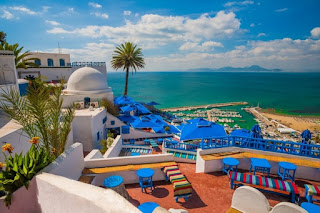
John decided to holiday in Sousse because his upbringing and heredity have determined that Sousse is his kind of place.
There is simple causation (one ball hits another one and it causes the second one to move) and causation that results from careful thinking.
A criminal might commit a crime 'because he was born criminal and brought up criminal."
But, the criminal is free to do the 'unpredictable' and to be good.
The criminal is free to think about his actions.
You can be unpredictable.

You can avoid being manipulated.
"Freedom, of the important kind, of the kind worth wanting, is freedom from being manipulated."
Does free will really exist?
Who are the people who are being manipulated and who are therefore not free?
It is mainly the ultra-conservatives, the extremists and the fundamentalists.
Think of the fundamentalist Jew who is not free to marry a Moslem.
Think of the White racist who is not free to make friends with a Black neighbour.

You could argue that William's 'guardian angel' led him to the travel exhibition.
You could argue that people are only 'free' when they are tuned in to 'the Holy Spirit'.
Why does one person make 'wrong' decisions and another make 'right' decisions?

Some Taoists would argue that every 'thing' and every 'action' is a mixture of 'good' and 'evil'.
Both Sharm el Sheikh and Paramaribo have their 'good' and 'bad' bits.
According to the Taoists, everything in the universe is single, whole, but composed of opposites.
"Taoists believe that nature is a continual balance between yin and yang, and that any attempt to go toward one extreme or the other will be ineffective, self-defeating, and short-lived."
What Taoists Believe

The Buddhists would argue that 'ignorance' is the cause of bad decisions and suffering.
Socrates would agree.
The Buddhists would also say that our sense of being a separate 'self' is an illusion.

John decided to holiday in Sousse because his upbringing and heredity have determined that Sousse is his kind of place.
In other words, a 'causal chain' led John to Sousse.
It can be argued that John was not forced to go to Sousse, and that in a sense his decision was 'free'.
It can be argued that 'conscious, determined decisions' are 'free will decisions'.
It turns out that there was trouble in Sousse, and John had made a bad decision.

"If there is an explosion in a public place, hotel, or shopping mall, you should know that it is the Tunisian special forces who planned it." Thus said El Hocine Khafi, a former official at the Ministry of Interior of Tunisia.Une base militaire américaine à la frontière tuniso-algérienne.
It can be argued that John was not forced to go to Sousse, and that in a sense his decision was 'free'.
It can be argued that 'conscious, determined decisions' are 'free will decisions'.
It turns out that there was trouble in Sousse, and John had made a bad decision.
"If there is an explosion in a public place, hotel, or shopping mall, you should know that it is the Tunisian special forces who planned it." Thus said El Hocine Khafi, a former official at the Ministry of Interior of Tunisia.Une base militaire américaine à la frontière tuniso-algérienne.
William decided not to holiday in Sharm el Sheikh, even though his upbringing and heredity have determined that Sharm el Sheikh is his kind of place.
Why does one person make 'wrong' decisions and another make 'right' decisions?
Chance or randomness can affect our decisions.
Daniel Dennett says determinism and free will are not incompatible.
Does free will really exist?
Why does one person make 'wrong' decisions and another make 'right' decisions?
Chance or randomness can affect our decisions.
Quite by chance, William had come across a travel exhibition and discovered that there were at least a dozen places better than Sharm el Sheikh.
The chance visit to the travel exhibition broke the 'causal chain' and allowed William to make a better choice.

Philosopher Daniel Dennet says you can exercise free will by doing something unpredictable.
Philosopher Daniel Dennet says you can exercise free will by doing something unpredictable.
This could mean going to Paramaribo rather than Las Vegas.
Does free will really exist?
There is simple causation (one ball hits another one and it causes the second one to move) and causation that results from careful thinking.
A criminal might commit a crime 'because he was born criminal and brought up criminal."
But, the criminal is free to do the 'unpredictable' and to be good.
The criminal is free to think about his actions.
You can be unpredictable.
"Freedom, of the important kind, of the kind worth wanting, is freedom from being manipulated."
Does free will really exist?
Who are the people who are being manipulated and who are therefore not free?
It is mainly the ultra-conservatives, the extremists and the fundamentalists.
Think of the fundamentalist Jew who is not free to marry a Moslem.
Think of the White racist who is not free to make friends with a Black neighbour.
You could argue that William's 'guardian angel' led him to the travel exhibition.
You could argue that people are only 'free' when they are tuned in to 'the Holy Spirit'.
Why does one person make 'wrong' decisions and another make 'right' decisions?
Some Taoists would argue that every 'thing' and every 'action' is a mixture of 'good' and 'evil'.
Both Sharm el Sheikh and Paramaribo have their 'good' and 'bad' bits.
According to the Taoists, everything in the universe is single, whole, but composed of opposites.
"Taoists believe that nature is a continual balance between yin and yang, and that any attempt to go toward one extreme or the other will be ineffective, self-defeating, and short-lived."
What Taoists Believe
The Buddhists would argue that 'ignorance' is the cause of bad decisions and suffering.
Socrates would agree.
The Buddhists would also say that our sense of being a separate 'self' is an illusion.
"The death of his younger brother, Edmund, from measles on 2 February 1900 deeply affected Hitler. He changed from being confident and outgoing and an excellent student, to a morose, detached, and sullen boy who constantly fought with his father and teachers.... After his father's sudden death on 3 January 1903, Hitler's behaviour at the technical school became even more disruptive, and he was asked to leave in 1904."
Alvin Plantinga defends God with his "free will defense"
"It is possible that God ... could not create a world with free creatures who never choose evil.
"It is possible that God .... would desire to create a world which contains evil - if moral goodness requires free moral creatures."
Jesus said that 'some seed fell on stony ground'.
Is that just bad luck?
One can speculate that if God is going to create 'a real world', then, as with a game of golf, there has to be an element of chance.

Discoveries in 'Quantum Physics' suggest that 'determinism' may be wrong.
The movement of 'particles' cannot always be predicted.
Dostoevsky points to characters who do bad things, knowing that they are bad, in order to assert their uniquness and independence.
Some might say that God does not have this burden, as, presumably, he is incapable of choosing evil?
Dostoevsky, and others, seem to suggest that all creatures go through a long learning process, which can involve suffering, in order to achieve enlightenment.

But what about 'justice'?
Let us assume that there is a God who is 'just' and 'fair'.
Jesus said that 'some seed fell on stony ground'.
How can God ensure that those who, by chance, have gone astray, are rescued from their bad luck?
For life to be fair, every single soul has eventually to reach perfection and salvation.
And every single soul has to experience the same range of 'ups' and 'downs'.

Life magazine reported (The Mystery of Chance):
On 1 March 1950, all the fifteen members of a church choir in Beatrice, Nebraska, due at practice at 7:20, were late.
For example, one couldn't start her car; and one mother and daughter were late because the mother had to call the daughter twice to wake her from a nap.
At 7:25 the church building was destroyed in an explosion. The members of the choir, Life reported, wondered if their delay was "an act of God."
...
To the Hindu, we are all part of God; our sense of being a separate individual, such as John or William, is an illusion; and all our souls eventually join up with God.
According to The Upanishads, the Hindu New Testament (Life And Death Explained?):
God is within all the created world (immanent) and outside all the created world (transcendent).
God becomes immanent (within all) until the end of evolution when the immanent has all again become transcendent (outside the created world). The created world evolves into the transcendent God.
Why?
For the joy of creation.
Why is there evil?
For the joy of good arising from it.
"Eventually suffering destroys the ego."
A Quote by Eckhart Tolle on suffering.
Alvin Plantinga defends God with his "free will defense"
"It is possible that God ... could not create a world with free creatures who never choose evil.
"It is possible that God .... would desire to create a world which contains evil - if moral goodness requires free moral creatures."
Jesus said that 'some seed fell on stony ground'.
Is that just bad luck?
One can speculate that if God is going to create 'a real world', then, as with a game of golf, there has to be an element of chance.
Discoveries in 'Quantum Physics' suggest that 'determinism' may be wrong.
The movement of 'particles' cannot always be predicted.
Dostoevsky points to characters who do bad things, knowing that they are bad, in order to assert their uniquness and independence.
Some might say that God does not have this burden, as, presumably, he is incapable of choosing evil?
Dostoevsky, and others, seem to suggest that all creatures go through a long learning process, which can involve suffering, in order to achieve enlightenment.
But what about 'justice'?
Let us assume that there is a God who is 'just' and 'fair'.
Jesus said that 'some seed fell on stony ground'.
How can God ensure that those who, by chance, have gone astray, are rescued from their bad luck?
For life to be fair, every single soul has eventually to reach perfection and salvation.
And every single soul has to experience the same range of 'ups' and 'downs'.
Life magazine reported (The Mystery of Chance):
On 1 March 1950, all the fifteen members of a church choir in Beatrice, Nebraska, due at practice at 7:20, were late.
For example, one couldn't start her car; and one mother and daughter were late because the mother had to call the daughter twice to wake her from a nap.
At 7:25 the church building was destroyed in an explosion. The members of the choir, Life reported, wondered if their delay was "an act of God."
...
To the Hindu, we are all part of God; our sense of being a separate individual, such as John or William, is an illusion; and all our souls eventually join up with God.
According to The Upanishads, the Hindu New Testament (Life And Death Explained?):
God is within all the created world (immanent) and outside all the created world (transcendent).
God becomes immanent (within all) until the end of evolution when the immanent has all again become transcendent (outside the created world). The created world evolves into the transcendent God.
Why?
For the joy of creation.
Why is there evil?
For the joy of good arising from it.
"Eventually suffering destroys the ego."
A Quote by Eckhart Tolle on suffering.
Why darkness? That the light may shine more.
Why suffering? For the instruction of the soul and the joy of sacrifice.
Why the infinite play of creation and evolution? For pure joy.
Why suffering? For the instruction of the soul and the joy of sacrifice.
Why the infinite play of creation and evolution? For pure joy.
The Buddhists teach that "it is only conventionally, not ultimately, true that we are persons."
Buddhist 'No-Self' Doctrine.
Buddhist 'No-Self' Doctrine.
Labels: Alvin Plantinga, Buddhism, causal chain, conscious determined decisions, Dennett, determinism, Dostoevsky, free will, Hinduism, Jesus, justice, manipulated, Quantum Physics, Socrates, Taoism, unpredictable, yin yang
posted by Anon @ 09:12
21 Comments