Good people will like your imperfections. No one is perfect.
WHAT IS SOCIAL ANXIETY?
Social anxiety disorder is a fear of social situations. Symptoms include dreading every day activities like starting conversations or answering the phone. Sufferers may also avoid eye contact and have low self esteem. Some may also feel sick, sweat, tremble or have palpitations or panic attacks in social situations. Sufferers may have cognitive behavioural therapy. Source: NHS.co.uk
Don't be afraid to smile and be silly.
What I noticed about some South East Asians -
1. They are more likely to be brought up by a large extended family, and not just by a Mother who might suffer from social anxiety.
2. They are less likely to be bullied about sexuality, unless there are fundamentalists in the community.
3. They are more likely to be brought up to be friendly, fun-loving and sociable.
4. They are less likely to think about themselves as individuals. They are more likely to think about the welfare of the group to which they belong.
5. Social anxiety increases when 'Western' or 'fundamentalist' culture is introduced. Have fun. How to deal with Social Anxiety?
1. Switch off 'concern for yourself' and concentrate on making other people happy.
2. Laura L. Smith, Ph.D. suggests you might consider these coping phrases when you're in a self-absorbing situation:
Everything isn't all about me.
So what if a few people have negative thoughts about me?
Mistakes just make people human.
No one is going to remember what I did a week from now.
What matters is where my heart is, not how I perform.
Dr Hamilton refers to a study at the University of California, Riverside, where volunteers were asked to perform five acts of kindness a week for six weeks.
The psychologists found that those who performed the acts of kindness became happier.
Marriages work better when people are kind.
Professor Gottman and his colleagues studied 700 newlywed couples for 15 minutes and, by counting the positives (kindness) and negatives (eg. anger), predicted with 94 per cent accuracy who would still be together ten years later.
....
Kindness protects against heart attacks and strokes.
Kindness spreads.
Each time we are kind, we inspire someone else to be kind.
When I was 11 years old and I was in the school library. A book fell of the shelf beside me. It was 'The Magic Power of Your Mind' by Walter Germaine.
At the time my mum was suffering from depression, which had begun a few years earlier as post natal (post partum) depression. I had an instinct that the book would help my mum so I took it home.
It really helped her. It didn’t cure her in a day or anything like that, but it taught her insights and strategies...
I learned a bit about the placebo effect...
Now, there is a wealth of research showing beyond all doubt that your thoughts, beliefs and emotions cause physiological, biological, and even genetic changes all throughout your body...
Paying attention to your breathing also causes structural changes in the brain in such a way that makes it easier to find peace amid chaos.
Imagining happy things alters brain chemistry that can make you feel better...
Imagining moving your arm convinces your brain that you’re actually moving it, an insight from neuroscience that has reaped benefits for thousands of stroke patients, and athletes...
The spooks use tactics that "aim to divide, manipulate, and control public opinion using fear, propaganda, disinformation, psychological warfare, agents provocateurs, and false flag terrorist actions."
When the brain feels some kind of stress, it starts flooding the body with chemicals.
This creates a variety of reactions such as an increase in blood pressure and heart rate.
Stress can improve how your heart works and protect your body from infection.
In one study, individuals who experienced moderate levels of stress before surgery were able to recover faster than individuals who had low or high levels.
Patients can be healed by hypnosis, behavioral therapy (changing unhelpful thinking and behaviour) and the use of 'virtual reality'.
Jo Marchant took part in a virtual reality experiment.
She put her foot in a box of unbearably hot water.
She felt her foot burning and removed her foot.
Then she put on noise-canceling headphones and began to play a snow-and-ice-themed video game.
When she returned her foot to the hot water, she barely noticed the heat.
Jo Marchant explains the ways we can rewire our brains and improve our health.
According to Jo marchant: "believing in an angry or judgmental God seems to make people more stressed".
Inflamations can be removed by removing stress.
Jo Marchant refers to the health benefits of friendship, social connections and meditation.
The ftpoints out that in one part of the UK it was discovered that just 4% of local people were between them consuming up to 50% of the health and social care budget. One of the 4% is Jennie Woolmington who suffers from lupus, chronic obstructive pulmonary disorder, osteoporosis and diabetes. To help keep Jennie Woolmington and others like her out of hospital, the local health authority has created 'health coaches'.
Research shows that in a typical town just a small handful of families cause most of the serious problems for the police, for the schools and for the health system.
He lost his job because of his apparent chronic back pain, the result of an apparently minor road accident.
Immobility has caused him to put on weight, and then develop type-two diabetes.
His heavy doses of prescribed narcotics and sedatives, and his lack of exercise, may be the problem.
Recent research has shown that our brain structure is very flexible, and continually changing.
Practicing certain habits or behaviours brings real physical changes to the part of the brain associated with that activity.
For example, if you decide to learn to play the piano, you will develop more neural connections (and perhaps even more brain cells) in the parts of the brain associated with motor activity and musical ability.
If you meditate regularly for years, you will develop more ‘gray matter’ in the areas associated with attention, concentration and compassion.
So in that sense, rather than being completely controlled by our brains, we have control over them.
Research shows that the genetic structures we inherit from our parents don't remain fixed throughout our lives.
Our genetic structures are altered by the life experiences we undergo, so that the genes we pass on to our children will be different to those we inherited.
Studies of twins show that, when twins are exposed to very different environments and life experiences, in their later life they show striking differences in their DNA.
It could be said that we have the capacity to control our genes, rather than them just controlling us.
In 1976, while working at the Institute of Tropical Medicine, Piot was part of the team that discovered the Ebola virus.[2][3]
A Belgian doctor working in Zaire had sent a blood sample from a Belgian nun who had fallen ill for further research after he could not identify the disease. Piot and his colleagues discovered the virus, and subsequently traveled to Zaire to help quell an outbreak which was spreading in the country.
Piot's team made key discoveries into how the virus spread, and traveled from village to village, spreading information and putting the ill and those who had come into contact with them into quarantine. The epidemic was stopped in three months, after it had killed almost 300 people.[4]
How did Ebola get from Zaire to Liberia, about 3,500km away?
Dr. Cyril Broderick, A Liberian scientist and a former professor of Plant Pathology at the University of Liberia’s College of Agriculture and Forestry, suggests that the U.S. is responsible for the Ebola outbreak in West Africa.
Dr. Broderick, in Liberia's Daily Observer wrote:
"The US Department of Defense (DoD) is funding Ebola trials on humans - trials which started just weeks before the Ebola outbreak in Guinea and Sierra Leone...
"The DoD gave a contract worth $140 million dollars to Tekmira, a Canadian pharmaceutical company, to conduct Ebola research.
"This research work involved injecting and infusing healthy humans with the deadly Ebola virus.
"Hence, the DoD is listed as a collaborator in a 'First in Human' Ebola clinical trial (NCT02041715, which started in January 2014 shortly before an Ebola epidemic was declared in West Africa in March.
Richard C. Davis, M.D., a former flight surgeon with the U.S. Navy, told Infowars that he was leading a project to develop a drug called RC-2Beta.
In the Autumn of 2013, Davis' company began working with the US Army at Ft. Detrick, Maryland, to develop the drug, with astounding success.
According to Davis, the drug "Killed four of the world’s deadliest viruses...
"Everyone was very excited about these results since there has never been a broad-spectrum anti-viral drug that killed so many different viruses without affecting normal (uninfected) cells in this way," writes Davis.
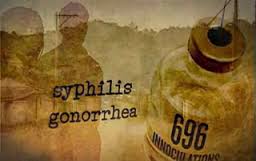
Between 1946 and 1948, in Guatemala, US government scientists deliberately infected more than 1500 soldiers, prostitutes, prisoners and even mental patients with syphilis and other sexually transmitted diseases.
None of the test subjects infected with the diseases ever gave informed consent. Some of the test subjects died.