Tuesday, 5 March 2019

HOW TO REDUCE CRIME


Between 2004 and 2017, in Glasgow in Scotland, the number of people admitted to the city's hospitals for knife wounds fell by 65%.

Meanwhile, knife crime in England has risen by 54%.

England has a Conservative government.

In Glasgow, the Violence Reduction Unit (VRU) has concentrated on social work and reducing unemployement.

In other words, 'the poor'  are being given 'a cuddle'.


In New York, Anne Heller uses the Attachment and Biobehavioural Catch-Up programme (ABC) to make families more civilised.

ft.com

Stressed kids can have poor cognitive development.

The idea of the ABC programme is to strengthen the parent-child bond and thus reduce stress for children and thus improve mental development.

The ABC programme was developed by Professor Mary Dozier of the University of Delaware.

Heller and colleagues set up a non-profit organisation called Power of Two, which delivers ABC in New York City.

The result is that parents show real change in their parenting and children improve significantly in their wellbeing.


Why do some kids become savages?

Usually because they have been neglected, or, abused.

Children can be neglected both at home and in a poorly-staffed nursery school.

Psychologist Oliver James refers to "childcarers who scrape through school and are doing it for the money, often spending the day texting their boyfriends."

(Some nurseries are excellent and have wonderful staff)


Robert Thompson's parents, Ann and Robert, were heavy drinkers and there was violence in the home. (Profiles: the Bulger killers, Jon Venables and Robert Thompson ) 

Small children need lots of individual attention and love.

Do nurseries make todlers aggressive?

UK Psychologist Oliver James thinks that nurseries can turn toddlers into savages.

Naughty children? Blame mothers, says Oliver James - Telegraph

According to Oliver James, day care can produce more boastful, disobedient and aggressive children.

Oliver James says that UK government proposals to allow child-carers to look after more youngsters will make things worse.

Nursery places in Britain have expanded at the same time as a rise in violence in primary school classrooms.

40 primary school children in England are expelled every day for assaulting their teachers.


Jon Venable's mother Susan Venables has been described as a loose woman whose neighbours "noted a procession of men friends for Mrs Venables". "She had been observed physically and verbally assaulting Jon."

(Did bad parenting turn Thompson and Venables into killers? UK ...). 

When Jon Venables stayed with his father Neil, there were violent videos to watch, including Child's Play 3.

Oliver James refers to a study in America which tracked children for 15 years. 

It showed a correlation between the hours spent in a nursery to increased aggression and bad behaviour.

"Studies show there is a direct link between how many hours you spend in daycare up to the age of four and a half and how aggressive you are."


Good nannies can be better than nursery workers.

Oliver James says Mothers who go out to work are to blame for their children's bad behaviour.

In his new book Oliver James says mothers of toddlers should avoid working outside the home.

Putting toddlers into nurseries is ‘warehousing’ them so that the government could push mothers back to work, writes James.

Oliver James would like to see the government creating a network of nannies.

The elite prefer nannies to nursery schools.

A generation of 'little savages' raised in nurseries as ... - Daily Mail

Oliver James is against the strict disciplining of young children.

James writes: "As a parent of a child of this age, you need to realise that if things go pear-shaped it is actually always your fault, in the sense that if you keep a close enough eye on them you can prevent atrocities..."

Young children "need to be in the presence of a responsive, loving adult at all times".


Oliver James attacks the methods of Gina Ford, a former maternity nurse who has become a best-selling toddler 'guru'.

He writes: "There is a great deal of evidence that very strict routines do lead to more insecure, and to more irritable and fussy, babies."

According to Oliver James, The Naughty Step Technique "often result in repetition of the undesired behaviour, rather than successful management. 

"If you are not careful, you are just creating a guaranteed method for your children to wind you up."

Oliver James writes that while babies that are left to cry may be more likely to sleep through the night, "it is the babies whose needs have been met who become the secure, calm and satisfied children and productive schoolchildren, and adults."


UK government minister Elizabeth Truss, who planned for more toddlers to be cared for by fewer nursery teachers.

Much depends on the quality of parents or carers.

Jill Rutter, research manager for the Family and Parenting Institute and Daycare Trust says: "children who attended high quality nurseries were much less likely to experience later behavioural problems...

"Nurseries or registered childminders are the only affordable option for most parents..."

A generation of 'little savages' raised in nurseries as ... - Daily Mail


Lloyd de Mause

Lloyd de Mause in The Journal of Psychohistory, Winter 1998, refers to The History of Child Abuse. 

(The History of Child Abuse Lloyd deMause - The Journal of Psychohistory)

"We cannot be content to only continue to do endless repair work on damaged adults, with more jails and police and therapists and political movements.

"Our task now must be to create an entirely new profession of “child helpers” who can reach out to every new child born on earth and help its parents give it love and independence...

" The success of parenting centers such as the one pioneered in Boulder, Colorado, for instance, has been astonishing.


"Through parenting classes and home visiting by paraprofessionals, they have measurably reduced child abuse, as shown by careful followup studies and by reduced police reports and hospital entrance rates.

"All this has been accomplished with very small monetary outlays, since these parent outreach centers operate mainly with volunteer labor, while it has the potential to save trillions of dollars annually in the costs of social violence, police enforcement, jails and other consequences of the widespread child abuse of today.

"Such a parent support movement would resemble the universal education movement of over a century ago...

aangirfan: HELP THE PARENTS - REDUCE YOUTH CRIME

aangirfan: JON VENABLES


In the UK, 19.8% of school pupils have special educational needs 

(eg learning and behavioural difficulties)

The EU average is 4%

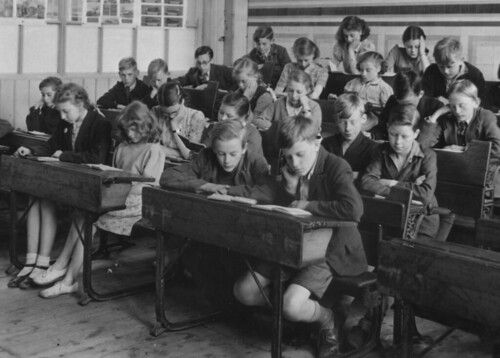
Photo by Bert Hardy

Why does one child succeed in life, and another one 'fail'?

In How Children SucceedPaul Tough writes that what matters most is character skills.

These are skills such as self confidence, optimism, perseverance, curiosity, conscientiousness, and self-control.

In other words, emotional intelligence, as taught by good parents, good mentors and good private schools, is what matters.


Both rich children and poor children can lack emotional intelligence.

"Suniya Luthar, a psychologist at Columbia University found significant psychological problems at the high end of the income spectrum... These problems arise most often in those high-income homes where children feel simultaneously a great pressure to achieve and an emotional distance from their parents..."


Bill Brandt

"Apparently medical reasons explain why children who grow up in abusive or dysfunctional environments generally find it harder to concentrate, sit still and rebound from disappointments. 

"The part of the brain most affected by early stress is the prefrontal cortex, which is critical for regulating thoughts and mediating behaviour. 

"When this region is damaged - a common condition for children living amid the pressures of poverty - it is tougher to suppress unproductive instincts."


Website for this image...

Children who do not have good parents need good mentors and tutors, according to Paul Tough.

"Studies show that early nurturing from parents or caregivers helps combat the biochemical effects of stress. 

"And educators can push better habits and self control. 

"The 'prefrontal cortex is more responsive to intervention than other parts of the brain,' writes Mr Tough. 

"It stays malleable well into early adulthood. 

"Character can be taught."

School reform: Stay focused | The Economist


The problem is - how does a child from a problem family find a good mentor?

The best mentors are often grandparents.


Labels: , , , , , , , , , , , , , ,

Monday, 22 August 2016

UNFRIENDED ON FACEBOOK; UNFRIEND FACEBOOK


Social Media Affects Child Mental Health.

Is it time to UNFRIEND Facebook?

Facebook tracks your use of the internet - and thus knows much about your personal life.

All of the Creepy Things Facebook Knows About You

Facebook compiles a list of personal details about you.

The Washington Post points out that Facebook knows every time you visit certain pages on the internet.

Facebook works with companies like Epsilon and Acxiom who gather information from government records.

Facebook most likely knows your Location, Age, Income and net worth, Home value, if you are away from family or hometown, your parents, your political interests, your job, your boss, your wealth, your travels etc.

Washington Post


Reportedly, Facebook can cause depression.

"One potential cause for depression involves the extremely negative comments that some Facebook users may leave behind.

"This form of 'cyberbullying' is far too common and can lead to emotional distress given the kind of language used."

Exploring Facebook Depression | Psychology Today


The USA's National Security Agency has this Facebook photo in its files.

What it looks like when the NSA hacks into your Gmail and Facebook.

You can be impersonated, and fake material can appear on your Facebook page.

I Was Impersonated On Facebook - Forbes.

You might be unfriended.

...

At least 63% of people report having unfriended someone on Facebook.

Why We Unfriend - The Atlantic.

A relation of mine was recently unfriended by someone on Facebook.

I tried to comfort them by pointing out that I have recently been unfriended by at least half a dozen people.

At Slate, we read about The psychology of unfriending someone on Facebook.

Christopher Sibona, of the University of Colorado Denver, speculates that we are often unfriended, on Facebook, by people who disagree with us about religion or politics. 

I know that four members of my extended family have unfriended me because they do not want to be associated with a 'conspiracy theorist' who believes that 9 11 was an inside job.

Who wants their buddies to know that they have a 'conspiracy theorist' in the family?


Christopher Sibona writes: "the cost of maintaining Facebook friendships is pretty low.

"If you make a conscious effort to push a button to get rid of someone, that can hurt." 


My impression is that Facebook is mainly for young women who like to communicate with a small group of very close buddies.

If you are not one of those close buddies, then you 'friendship' on Facebook is an irritation and might be an embarrassment. 

So far as I can see, men are posting less on Facebook.


A 2016 report published by The Information on revealed that Facebook has been struggling to reverse a 21% decline in 'original sharing,' or personal updates, from its 1.6 billion monthly active users.

Facebook is OK for photos of the kids and the holidays.

But, not everyone wants their non-buddies to view these and leave comments.

Not everyone wants their hen night or stag do to be seen by all their Facebook 'friends'.

And not everyone wants news, politics and religion.

Facebook Users Are Sharing Less - Fortune.

Below is what we wrote in an earlier post:


True Friends don't worry about the pecking order.

Facebook can become like the big family get-together at Christmas.

"Christmas time," explains psychologist Oliver James, "triggers historic enmities like nothing else.

All of us, at some time or other, worry about status.

Ideally, we should never worry about status.

If we find that we only get one Christmas card, and that we only have one Facebook friend, we should not worry.

If we we are abandoned by our mother and fail to get any qualifications at school, we should not worry.

If we lose our job, our pension, and our wife, we should not worry.

All that matters is that we have a noble soul.

And if we have a noble soul, we have high status.

And if we have a noble soul we don't have to worry about the 'pecking order' or 'being one up'.

And if we have a noble soul we may even start getting Christmas cards from the people who matter most.


Worldly Status has been linked to 'pecking order'.

But remember that Jesus said: He who is last shall be first, and he who is first shall be last.


An acquaintance with an inferiority complex may try to lower your status, in order to make themselves feel better.

Even members of your own family may try to lower your status.

To lower another person's status:

Talk sarcastically to them.

Make them wait for you.

Tease them.

Laugh at them.

Criticize something they did.

Insult them.

Give them unsolicited advice.

Ignore what they said and talk about something else.

Disregard their opinion.

Status


Reportedly, from the World's point of view, high-status behaviors include: 

When walking, assuming that other people will get out of your path.

Interrupting before you know what you are going to say.

Creating the feeling that you are a parent talking to a child.

Speaking authoritatively, with certainty.

Making decisions for a group; taking responsibility.

Evaluating other people's work.

Status


aje.oxfordjournals.org.

Reportedly, low-status behaviors include: 

When walking, moving out of other people's path.

Looking away from the other person's eyes.

Beating around the bush when talking about something that will displease the other person.

Shouting as an attempt to intimidate the other person.

Status

If you want to raise another person's status

Ask their opinion about something.

Ask them for advice or help.

Downplay your own achievement in comparison to theirs.

Mention a failure or shortcoming of your own.

Status

...
Eric Berne, who wrote about the games people play.

Do your associates and members of your family play 'power games'?

Prisoners find ways to manipulate their prison guards, in order to get 'one-up'.

School children find ways to irritate their teachers, in order to compensate for a perceived lack of power.

Spouses find ways to manipulate the emotions of their partners.

Power games involve the struggle for psychological one-upmanship, often employing passive–aggressive behaviour.


Here are some examples:

1. A husband, wife and their children debate where to go on holiday.

The husband and children opt for the Island City House Hotel in Key West in Florida.

The wife opts for the Westgate Las Vegas Resort & Casino in Las Vegas.

The family ends up at the Key West Hotel.

The wife feels the need to publicly find fault with everything at the hotel, although secretly she thinks the hotel is superb.

The following year, the wife begs to be taken back to the Key West Hotel.


2. Your boss is driving you to a conference in Zurich.

He is finding it difficult to locate the 'Sonnenberg Convention Center'.

You point out to him that the building being sought is the red roofed building on the right.

Your boss ignores you and drives around the city for a further twenty minutes, before returning to the street with the red roofed building.

Your boss claims to have found the red roofed 'Sonnenberg Convention Center' due to his own excellent skills.


3. A woman called Ophelia pays her regular visit to her elderly mother.

Ophelia happens to be carrying a travel brochure which she has picked up for her entertainment.

The elederly mother says to Ophelia: "You have not had a holiday for many years. Why don't you take a holiday?"

Before Ophelia can reply, the elderly mother coughs loudly and says: "I am feeling quite faint."

A week later, Ophelia says to her elderly mother: "Would you like me to take you for a little walk?"

The elederly mother replies: "You poor soul, have you no friends to accompany you on a walk."


Mone of us are not quite what we seem.

Dr Max Lüscher, born 1923 in Switzerland, is the Swiss psychotherapist who developed the Luscher Color Test to test moods, feelings and attitudes:

Colorquiz or The Luscher Color Test

Luscher, in his book The 4-Color Person, describes what we may be like, if we are not happy and balanced.

He describes the following types of people:


1. The Good Natured Angel

Good Natured Angels  do 'good deeds'.

They expect their victims to enslave themselves in eternal gratitude and devotion.

Good Natured Angels often have another side to them.


Good Natured Angels can be Discontented Devils.

Discontented Devils have secret self doubts.

They put aside their own need for intimacy.

Discontented Devils can be agitated, irritable, over-critical, self-pitying, easily exausted loners.

Dissatisfied Devils do not know how to achieve relaxed closeness.

This can be because of a disturbance in their relationships with their mothers.

Dissatisfied Devils don't have the solid foundations of trust and devotion which can ultimately outlast all sensitivities and conflicts.

They seem incapable of being content with their existing partner.

The Good Natured Angels who are Discontented Devils need to learn to avoid exaggerated self-sacrifice if they want to find contentment.

The dissatisfied devil needs to learn about relaxed closeness, moderation, and contentment


Photo by Leebobs

2. The Conceited Peacock

The conceited peacock tends to be bossy, stubborn and overrating.

Beneath the arrogance lies stupidity.

Conceited peacocks may suffer from impotence or frigidity.

Sex functions as a means of dominating their mates.

They think they are very conscientious, but often they don't do anything.


The other side to the Conceited Peacock is the mocking Agile Snake.

Agile Snakes have secret self doubts.

They have an inferiority complex.

The Agile Snake may take a lover, in order to be more independent of their wife/husband. 

Or because they find their existing partner is not absolutely perfect.

Secretly they yearn for tender and affectionate togetherness.

But they don't want to be dependent on anyone.

The Agile Snakes inferiority complex will disappear as they become more noble and fair.


3. The Pompous Showoff

The pompous showoff likes the idea of large houses, large cars, and large armies.

They like to impress others.

They will choose their partners for social reasons, to impress society. 

They judge a relationship by its market value.


When things go wrong, the pompous showoff becomes a Tormented Martyr.

Tormented martyrs swim in self-pity.

They turn every joy into a duty.

They enjoy being tragic heroes.

Instead of using their abilities, and increasing their self-confidence, they founder in passivity.

When the pompous showoff has some REAL achievements, unrelated to impressing the herd, then they will gain genuine self confidence and not need to be pompous and boasting.

To gain self-confidence, the martyr must stop being passive and instead be ready for peaceful achievement and peaceful challenge.


4. The Expectant Visionary

Expectant visionaries defend themselves against reality by reinterpreting reality.

They are romantics and approach a new mate full of enthusiasm.

However the mate becomes less attractive sexually once he/she becomes a familiar reality for them.

Just when genuine love ought to develop, visionaries lose interest in their mate and look for something new.

Visionaries enjoy travel, in the hope of finding new illusions.

They live for the future, or the past, but cannot live in the present.

They are wishful thinkers.


When Expectant Visionaries become disillusioned, they become Armoured Knights.

The armoured knight supports the military.

The armoured knight seeks safety and security once they have taken a lot of disappointments.

They are filled with distrust. They may be paranoid.

They require order.

They may take up a creed which supports crusades, inquisitions and wars.

They may distrust their mates and be filled with jealousy.

The armoured knight needs to become less pedantic and less compulsive.

The visionaries will lose their restlessness by being more realistic and developing themselves in a happy, free and light-hearted manner.


5. The Balanced Type is:

A. Noble, charitable, flexible, self respecting and fair.

B. Moderate, peace-loving and content.

C. Self confident as a result of his/her achievements.

D. Happy, light-hearted and independent as a result of self development and not clinging to worldly goods.


Oliver James

According to someone who worked in a psychiatric hospital:

"Patients had 'events' mostly on days when visited by... 'loving, supportive families'.

"One girl in her twenties, who was before that time a school teacher, climbed the wall when she was told her mother was coming to visit her that day.

"Climbing the wall is an understatement, she became inhuman - not a pretty sight."

Comment by a member of the public on The Genes Don't Fit, by Oliver James, 16/10/2010, New Statesman (Read more)

1. Psychologist Oliver James has analysed the behaviour of George W Bush


"Barbara Bush is described by her closest intimates as prone to 'withering stares' and 'sharply crystalline' retorts. 

"She is also extremely tough. 

"When he was seven, Bush's younger sister, Robin, died of leukaemia and several independent witnesses say he was very upset by this loss. 

"Barbara claims its effect was exaggerated but nobody could accuse her of overreacting: the day after the funeral, she and her husband were on the golf course."

Read more

2. According to UK psychologist Oliver James:

"The closer a nation approximates to the American model ... the greater the rate of mental illness amongst its citizens".

According to Oliver James, Americanism means, for example:

1. Women rejecting the role of the mother.

2. Television corrupting people.

3. Children spending too much time at school.

(OLIVER JAMES INTERVIEWED (2004): If You're Happy and You Know It) 

3. Oliver James has written 'How Not to F*** Them Up'. 

"Basically I was fucked up by my mother," says Oliver James.

"She had four children under the age of five and found it difficult to cope.

"Often, I was left crying in my pram at the bottom of the garden."

(Oliver James: It's all about you - Profiles, People - The Independent)


4. "Christmas time," explains Oliver James, "is a fixed ritual setting which triggers historic enmities like nothing else.

"The culmination of all these; in the form of present-giving, the pecking order at the table, who does the washing-up, means the shit really hits the fan at this time of year.

"People revert back to being a child without realising it."

To avoid the usual tensions ... Oliver James suggests that we identify what role we occupy in our family, then do the exact opposite.

(Jingle hell: Stories from those who avoid christmas.)

5. Oliver James is in favour of 'love bombing' for children.

He argues that feeling loved is a better remedy than dishing out rules and punishment.

"In fact, feeling loved is far more important for childhood discipline than rule-making and punishment.

"At the heart of the matter is that a sense of being satisfied only comes from having demands met - needy, aggressive behaviour comes from feeling dissatisfied."

(Love bombing kids to get happy results thetelegraph.com.au)


Labels: , , , , , , , , , ,

Friday, 1 January 2016

STATUS - PECKING ORDER - BEING ONE UP - POWER GAMES


True Friends don't worry about the pecking order.

"Christmas time," explains psychologist Oliver James, "triggers historic enmities like nothing else.

All of us, at some time or other, worry about status.

Ideally, we should never worry about status.

If we find that we only get one Christmas card, and that we only have one Facebook friend, we should not worry.

If we we are abandoned by our mother and fail to get any qualifications at school, we should not worry.

If we lose our job, our pension, and our wife, we should not worry.

All that matters is that we have a noble soul.

And if we have a noble soul, we have high status.

And if we have a noble soul we don't have to worry about the 'pecking order' or 'being one up'.

And if we have a noble soul we may even start getting Christmas cards from the people who matter most.


Worldly Status has been linked to 'pecking order'.

But remember that Jesus said: He who is last shall be first, and he who is fist shall be last.


An acquaintance with an inferiority complex may try to lower your status, in order to make themselves feel better.

Even members of your own family may try to lower your status.

To lower another person's status:

Talk sarcastically to them.

Make them wait for you.

Tease them.

Laugh at them.

Criticize something they did.

Insult them.

Give them unsolicited advice.

Ignore what they said and talk about something else.

Disregard their opinion.

Status


Reportedly, from the World's point of view, high-status behaviors include: 

When walking, assuming that other people will get out of your path.

Interrupting before you know what you are going to say.

Creating the feeling that you are a parent talking to a child.

Speaking authoritatively, with certainty.

Making decisions for a group; taking responsibility.

Evaluating other people's work.

Status


aje.oxfordjournals.org.

Reportedly, low-status behaviors include: 

When walking, moving out of other people's path.

Looking away from the other person's eyes.

Beating around the bush when talking about something that will displease the other person.

Shouting as an attempt to intimidate the other person.

Status

If you want to raise another person's status

Ask their opinion about something.

Ask them for advice or help.

Downplay your own achievement in comparison to theirs.

Mention a failure or shortcoming of your own.

Status

...
Eric Berne, who wrote about the games people play.

Do your associates and members of your family play 'power games'?

Prisoners find ways to manipulate their prison guards, in order to get 'one-up'.

School children find ways to irritate their teachers, in order to compensate for a perceived lack of power.

Spouses find ways to manipulate the emotions of their partners.

Power games involve the struggle for psychological one-upmanship, often employing passive–aggressive behaviour.


Here are some examples:

1. A husband, wife and their children debate where to go on holiday.

The husband and children opt for the Island City House Hotel in Key West in Florida.

The wife opts for the Westgate Las Vegas Resort & Casino in Las Vegas.

The family ends up at the Key West Hotel.

The wife feels the need to publicly find fault with everything at the hotel, although secretly she thinks the hotel is superb.

The following year, the wife begs to be taken back to the Key West Hotel.


2. Your boss is driving you to a conference in Zurich.

He is finding it difficult to locate the 'Sonnenberg Convention Center'.

You point out to him that the building being sought is the red roofed building on the right.

Your boss ignores you and drives around the city for a further twenty minutes, before returning to the street with the red roofed building.

Your boss claims to have found the red roofed 'Sonnenberg Convention Center' due to his own excellent skills.


3. A woman called Ophelia pays her regular visit to her elderly mother.

Ophelia happens to be carrying a travel brochure which she has picked up for her entertainment.

The elederly mother says to Ophelia: "You have not had a holiday for many years. Why don't you take a holiday?"

Before Ophelia can reply, the elderly mother coughs loudly and says: "I am feeling quite faint."

A week later, Ophelia says to her elderly mother: "Would you like me to take you for a little walk?"

The elederly mother replies: "You poor soul, have you no friends to accompany you on a walk."


Mone of us are not quite what we seem.

Dr Max Lüscher, born 1923 in Switzerland, is the Swiss psychotherapist who developed the Luscher Color Test to test moods, feelings and attitudes:

Colorquiz or The Luscher Color Test

Luscher, in his book The 4-Color Person, describes what we may be like, if we are not happy and balanced.

He describes the following types of people:


1. The Good Natured Angel

Good Natured Angels  do 'good deeds'.

They expect their victims to enslave themselves in eternal gratitude and devotion.

Good Natured Angels often have another side to them.


Good Natured Angels can be Discontented Devils.

Discontented Devils have secret self doubts.

They put aside their own need for intimacy.

Discontented Devils can be agitated, irritable, over-critical, self-pitying, easily exausted loners.

Dissatisfied Devils do not know how to achieve relaxed closeness.

This can be because of a disturbance in their relationships with their mothers.

Dissatisfied Devils don't have the solid foundations of trust and devotion which can ultimately outlast all sensitivities and conflicts.

They seem incapable of being content with their existing partner.

The Good Natured Angels who are Discontented Devils need to learn to avoid exaggerated self-sacrifice if they want to find contentment.

The dissatisfied devil needs to learn about relaxed closeness, moderation, and contentment


Photo by Leebobs

2. The Conceited Peacock

The conceited peacock tends to be bossy, stubborn and overrating.

Beneath the arrogance lies stupidity.

Conceited peacocks may suffer from impotence or frigidity.

Sex functions as a means of dominating their mates.

They think they are very conscientious, but often they don't do anything.


The other side to the Conceited Peacock is the mocking Agile Snake.

Agile Snakes have secret self doubts.

They have an inferiority complex.

The Agile Snake may take a lover, in order to be more independent of their wife/husband. 

Or because they find their existing partner is not absolutely perfect.

Secretly they yearn for tender and affectionate togetherness.

But they don't want to be dependent on anyone.

The Agile Snakes inferiority complex will disappear as they become more noble and fair.


3. The Pompous Showoff

The pompous showoff likes the idea of large houses, large cars, and large armies.

They like to impress others.

They will choose their partners for social reasons, to impress society. 

They judge a relationship by its market value.


When things go wrong, the pompous showoff becomes a Tormented Martyr.

Tormented martyrs swim in self-pity.

They turn every joy into a duty.

They enjoy being tragic heroes.

Instead of using their abilities, and increasing their self-confidence, they founder in passivity.

When the pompous showoff has some REAL achievements, unrelated to impressing the herd, then they will gain genuine self confidence and not need to be pompous and boasting.

To gain self-confidence, the martyr must stop being passive and instead be ready for peaceful achievement and peaceful challenge.


4. The Expectant Visionary

Expectant visionaries defend themselves against reality by reinterpreting reality.

They are romantics and approach a new mate full of enthusiasm.

However the mate becomes less attractive sexually once he/she becomes a familiar reality for them.

Just when genuine love ought to develop, visionaries lose interest in their mate and look for something new.

Visionaries enjoy travel, in the hope of finding new illusions.

They live for the future, or the past, but cannot live in the present.

They are wishful thinkers.


When Expectant Visionaries become disillusioned, they become Armoured Knights.

The armoured knight supports the military.

The armoured knight seeks safety and security once they have taken a lot of disappointments.

They are filled with distrust. They may be paranoid.

They require order.

They may take up a creed which supports crusades, inquisitions and wars.

They may distrust their mates and be filled with jealousy.

The armoured knight needs to become less pedantic and less compulsive.

The visionaries will lose their restlessness by being more realistic and developing themselves in a happy, free and light-hearted manner.


5. The Balanced Type is:

A. Noble, charitable, flexible, self respecting and fair.

B. Moderate, peace-loving and content.

C. Self confident as a result of his/her achievements.

D. Happy, light-hearted and independent as a result of self development and not clinging to worldly goods.


Oliver James

According to someone who worked in a psychiatric hospital:

"Patients had 'events' mostly on days when visited by... 'loving, supportive families'.

"One girl in her twenties, who was before that time a school teacher, climbed the wall when she was told her mother was coming to visit her that day.

"Climbing the wall is an understatement, she became inhuman - not a pretty sight."

Comment by a member of the public on The Genes Don't Fit, by Oliver James, 16/10/2010, New Statesman (Read more)

1. Psychologist Oliver James has analysed the behaviour of George W Bush


"Barbara Bush is described by her closest intimates as prone to 'withering stares' and 'sharply crystalline' retorts. 

"She is also extremely tough. 

"When he was seven, Bush's younger sister, Robin, died of leukaemia and several independent witnesses say he was very upset by this loss. 

"Barbara claims its effect was exaggerated but nobody could accuse her of overreacting: the day after the funeral, she and her husband were on the golf course."

Read more

2. According to UK psychologist Oliver James:

"The closer a nation approximates to the American model ... the greater the rate of mental illness amongst its citizens".

According to Oliver James, Americanism means, for example:

1. Women rejecting the role of the mother.

2. Television corrupting people.

3. Children spending too much time at school.

(OLIVER JAMES INTERVIEWED (2004): If You're Happy and You Know It) 

3. Oliver James has written 'How Not to F*** Them Up'. 

"Basically I was fucked up by my mother," says Oliver James.

"She had four children under the age of five and found it difficult to cope.

"Often, I was left crying in my pram at the bottom of the garden."

(Oliver James: It's all about you - Profiles, People - The Independent)


4. "Christmas time," explains Oliver James, "is a fixed ritual setting which triggers historic enmities like nothing else.

"The culmination of all these; in the form of present-giving, the pecking order at the table, who does the washing-up, means the shit really hits the fan at this time of year.

"People revert back to being a child without realising it."

To avoid the usual tensions ... Oliver James suggests that we identify what role we occupy in our family, then do the exact opposite.

(Jingle hell: Stories from those who avoid christmas.)

5. Oliver James is in favour of 'love bombing' for children.

He argues that feeling loved is a better remedy than dishing out rules and punishment.

"In fact, feeling loved is far more important for childhood discipline than rule-making and punishment.

"At the heart of the matter is that a sense of being satisfied only comes from having demands met - needy, aggressive behaviour comes from feeling dissatisfied."

(Love bombing kids to get happy results thetelegraph.com.au)

Labels: , , , , , , , , ,