Saturday, 1 August 2020

ROBERT MONROE; RONALD RUSSELL; JOSEPH CAMPBELL; UN COEUR SIMPLE; NEAR DEATH EXPERIENCE


Recently I have been thinking about 'out of body' experiences.

Yesterday morning I was sitting on a bench in the empty park, overlooking the local loch.

Along came an elderly lady, out for a walk, and she started talking to me.

It turned out that the lovely lady and her late husband were close friends of Robert Monroe, an expert on 'out of body experiences'.

The lady's late husband, Ronald Russell, has written the main biography of Robert Monroe.


Robert Monroe.

Monroe once said:


"I discovered, through my great astonishment, that I–the non-physical me-am composed of literally hundreds of previous life personalities and experiences.

"If we call it reincarnation that implies a law that forces you to do it. What “forces” one to come back into another life is addiction!

"It’s our choice. I don’t look upon it as karma. That law of karma is really you.


"For example, if there were something I didn’t get a chance to do in this life, I would get to do it in another life.

"My mother said that when she died, her sister and brother would be waiting for her.

"Interestingly enough, the following Tuesday, as I was heading for the office, I felt her presence about 8:15 in the morning. Just to prove her point, she reached over and squeezed my knee. 

"I couldn’t see her or anything, but I could feel here pressure. She was saying good-by.

"Five years later, we found out, that one year after her death, she was a one-year-old in a village in Italy. 


"We got her name, address, in a non-physical investigation. 

"We did find out that in that village there was a one-year-old girl that fit the name we had discovered in our non-physical investigation. 

"Five years later we discovered that she was amazing, and attracted a lot of attention as a child violinist."

"So, she went back to do the thing she was unable to do in this life."

Robert Monroe Interview


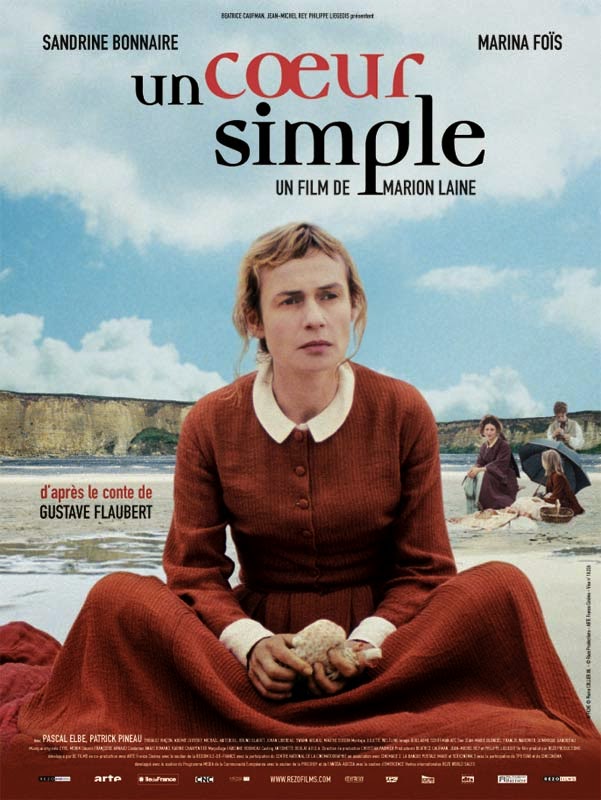
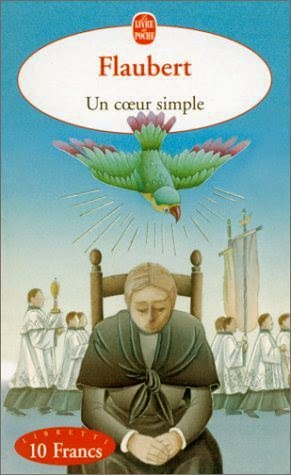
Felicité is a servant girl.

As Felicité is dying, she thinks that she meets the Holy Spirit.

The skeptic would say that she is deceived.

The non-skeptic would say that she may well have encountered the Holy Spirit.

Felicité is a fictional character in Gustave Flaubert's short story entitled A Simple Heart, or Le Perroquet.


"Felicité is very loyal, and easily lends her affections to the two children of her mistress, Mme Aubain.

"She gives entirely to others; although many take advantage of her, she is unaffected.

"She has no husband, no children, and no property, and is reliant on her mistress to keep her; she is uneducated, which bars her visits to the Church; her death is virtually unnoticed.

"Despite her life being seemingly pointless, she has within her the power to love, which she does even when she does not receive it in return."


Félicité has a beloved parrot called Loulou whom she has 'stuffed' when it dies.

"As she finally passed from this world to the next, Félicité thought she saw a gigantic parrot hovering in the opening heavens above her."

Flaubert

Flaubert was unlike Félicité.

"Flaubert was very open about his sexual activities with (male and female) prostitutes...

"He engaged in intercourse with male prostitutes in Beirut and Egypt; in one of his letters, he describes a "pockmarked young rascal wearing a white turban".[7][8]


...

Anonymous writes:

Félicité's name is no accident.

The author of course knew it's derived from the Latin word for happiness.

Yes, the happiest people are those who care for others in humble simplicity.

The most miserable people are the envious, the pretentious, who seek adulation, to be better than those around them. Those who chase their vain desires to the detriment of others. Never satisfied with what they have. In futility, trying to fill a bottomless void with more of the same selfishness.

The diametric opposite of Félicité is Madame Bovaryhaving little loyalty to or appreciation of those who love her. In a vain and never-ending quest for more - for herself. Dying in misery and pain. And leaving behind those who need her.

A parable in two stories.

The kingdom of heaven and the depths of hell are within us.

Which we choose is up to us.


What about 'real-life' Near-Death Experiences?

The skeptics will call into question the evidence.

In 1977, at a hospital in Seattle, a migrant worker called 'Maria' had an Near Death Experience during a cardiac arrest.

"She later told her social worker that while doctors were resuscitating her, she found herself floating outside the hospital building and saw a tennis shoe on a third-floor window ledge, which she described in some detail.

"The social worker went to the window Maria had indicated, and not only found the shoe but said that the way it was placed meant there was no way Maria could have seen all the details she described from inside her hospital room."

The social worker, Kimberly Clark Sharp, is still alive and available for interview.

But nobody knows the current whereabouts of Maria and so she is not available to confirm the story.


The skeptics will say that the story is not confirmed as being true.


...

Might the Near Death Experience (NDE) have a purpose?

The NDE "is similar to the hero's journey, or quest narrative, the structure that the American writer and mythologist Joseph Campbell identified and named the monomyth in 1949.

"The quest underlies just about every form of storytelling, from religious myth to Greek epic to Hollywood blockbuster to personal memoir.

"In this structure, a protagonist is shaken out of his normal way of life by some disturbance and - often reluctantly at first, but at the urging of some kind of mentor or wise figure - strikes out on a journey to an unfamiliar realm.

"There he faces tests, battles enemies, questions the loyalty of friends and allies, withstands a climactic ordeal, teeters on the brink of failure or death, and ultimately returns to where he began, victorious but in some way transformed."


davidrjolly.wordpress.com.


Campbell: "Have you ever read Sinclair LewisBabbitt?"
Moyers: "Not in a long time."
Campbell: "Remember the last line? 'I have never done a thing that I wanted to do in all my life.' That is a man who never followed his bliss."[20]


...

...

...

...

Labels: , , , ,

Thursday, 18 July 2019

JOSEPH CAMPBELL

...


Helped by invisible hands?


The American academic Joseph Campbell, in The Hero With a Thousand Faces, wrote:

"It is only when a man tames his own demons that he becomes the king of himself if not of the world."

Campbell writes about people going on a journey, overcoming various challenges, achieving greater wisdom, and then spreading this wisdom.

The Hero's journey can be internal.

Joseph Campbell.

Joseph Campbell advises you to "follow your bliss".

Joseph Campbell wanted to get above, or transcend, the world that most of us experience.

He wanted to tune in to the divine and experience bliss or rapture.


Joseph Campbell wrote:

"If you follow your bliss, you put yourself on a kind of track that has been there all the while, waiting for you, and the life that you ought to be living is the one you are living.

"Wherever you are - if you are following your bliss, you are enjoying that refreshment, that life within you, all the time."

(Joseph Campbell - Wikipedia)

...

Joseph Campbell lived most of his life in an apartment in a building on Waverly Place and Gay Street overlooking New York City's Sheridan Square and Christopher Street.


It can be argued that some people do not need to go on a journey, as they have already tuned in to the divine.

What would people who are 'tuned into the divine' look like?

The American academic Abraham Maslow studied mentally healthy people instead of people with serious psychological problems. 


According to Maslow, mentally healthy people have such qualities as:

Honesty

Goodness and kindness

Spontaneity

Fairness

Joy


Joseph Campbell, in The Hero With a Thousand Faces, wrote:

"Instead of clearing his own heart the zealot tries to clear the world."

In other words, avoid being a fundamentalist.

As Jesus said - see your own faults, rather than the faults of others.


Joseph Campbell, in The Hero With a Thousand Faces, wrote:

"The agony of breaking through personal limitations is the agony of spiritual growth.

"Art, literature, myth and cult, philosophy, and ascetic disciplines are instruments to help the individual past his limiting horizons into spheres of ever-expanding realization.

"As he crosses threshold after threshold, conquering dragon after dragon, the stature of the divinity that he summons to his highest wish increases, until it subsumes the cosmos.

"Finally, the mind breaks the bounding sphere of the cosmos to a realization transcending all experiences of form - all symbolizations, all divinities: a realization of the ineluctable (unable to be avoided) void."

The VOID can be seen as being an absence of the selfish personality or self.

Understanding the void means understanding that we are all brothers and sisters.

Emptiness: The Most Misunderstood Word.


Joseph Campbell, in The Hero With a Thousand Faces, wrote the following:

"Perhaps some of us have to go through dark and devious ways before we can find the river of peace or the highroad to the soul's destination."


"Wars and temper tantrums are the makeshifts of ignorance; regrets are illuminations come too late."


"As Freud has shown, blunders are not the merest chance. They are the result of suppressed desires and conflicts. They are ripples on the surface of life, produced by unsuspected springs. And these may be very deep - as deep as the soul itself.

"The blunder may amount to the opening of a destiny."


"Dream is the personalized myth ... in the dream the forms are quirked by the peculiar troubles of the dreamer."


"God is love."

~~

Labels: , , , , , , , ,

Sunday, 2 April 2017

JOSEPH CAMPBELL; ABRAHAM MASLOW; HERO'S JOURNEY


The American academic Joseph Campbell, in The Hero With a Thousand Faces, wrote:

"It is only when a man tames his own demons that he becomes the king of himself if not of the world."

Campbell writes about people going on a journey, overcoming various challenges, achieving greater wisdom, and then spreading this wisdom.

The Hero's journey can be internal.


Joseph Campbell.

Joseph Campbell advises you to "follow your bliss".

Joseph Campbell wanted to get above, or transcend, the world that most of us experience.

He wanted to tune in to the divine and experience bliss or rapture.


Joseph Campbell wrote:

"If you follow your bliss, you put yourself on a kind of track that has been there all the while, waiting for you, and the life that you ought to be living is the one you are living.

"Wherever you are - if you are following your bliss, you are enjoying that refreshment, that life within you, all the time."

(Joseph Campbell - Wikipedia)

...

Joseph Campbell lived most of his life in an apartment in a building on Waverly Place and Gay Street overlooking New York City's Sheridan Square and Christopher Street.


It can be argued that some people do not need to go on a journey, as they have already tuned in to the divine.

What would people who are 'tuned into the divine' look like?

The American academic Abraham Maslow studied mentally healthy people instead of people with serious psychological problems. 


According to Maslow, mentally healthy people have such qualities as:

Honesty

Goodness and kindness

Spontaneity

Fairness

Joy


Joseph Campbell, in The Hero With a Thousand Faces, wrote:

"Instead of clearing his own heart the zealot tries to clear the world."

In other words, avoid being a fundamentalist.

As Jesus said - see your own faults, rather than the faults of others.


Joseph Campbell, in The Hero With a Thousand Faces, wrote:

"The agony of breaking through personal limitations is the agony of spiritual growth.

"Art, literature, myth and cult, philosophy, and ascetic disciplines are instruments to help the individual past his limiting horizons into spheres of ever-expanding realization.

"As he crosses threshold after threshold, conquering dragon after dragon, the stature of the divinity that he summons to his highest wish increases, until it subsumes the cosmos.

"Finally, the mind breaks the bounding sphere of the cosmos to a realization transcending all experiences of form - all symbolizations, all divinities: a realization of the ineluctable (unable to be avoided) void."

The VOID can be seen as being an absence of the selfish personality or self.

Understanding the void means understanding that we are all brothers and sisters.

Emptiness: The Most Misunderstood Word.


Joseph Campbell, in The Hero With a Thousand Faces, wrote the following:

"Perhaps some of us have to go through dark and devious ways before we can find the river of peace or the highroad to the soul's destination."


"Wars and temper tantrums are the makeshifts of ignorance; regrets are illuminations come too late."


"As Freud has shown, blunders are not the merest chance. They are the result of suppressed desires and conflicts. They are ripples on the surface of life, produced by unsuspected springs. And these may be very deep - as deep as the soul itself.

"The blunder may amount to the opening of a destiny."


"Dream is the personalized myth ... in the dream the forms are quirked by the peculiar troubles of the dreamer."


"God is love."

~~

Labels: , , , , , , , ,