
Friday, 18 December 2015

THE SOUL


On the night he died, Alex told Irene Pepperberg, a professor, "You be good. I love you."

Alex was a parrot.

"Alex could pronounce over 100 words; could count to six; and understood abstract concepts...

"When he wanted to stop his laboratory tests and rest at a window overlooking the garden he would say 'Wanna go tree.'

"When other parrots mispronounced words he would correct them: 'Talk clearly.' 

Animal minds | The Economist

Sounds like parrots have got souls?


Phineas Gage.

Phineas Gage, born in 1823, had an accident which destroyed much of his brain's left frontal lobe.

He changed from being well-behaved to antisocial.

This leads to questions about 'the self' and 'the soul'.

René Descartes, born in 1596, believed that man has a soul which is separate from the body.

Thomas Hobbes, born eight years before Descartes, did not believe in such a 'soul'.

(Psychiatry professor George Makari, in Soul Machine: The Invention of the Modern Mind, refers to Phineas Gage. Lost soul | The Economist)

The 'personality' may be temporary. But what about the 'soul'?
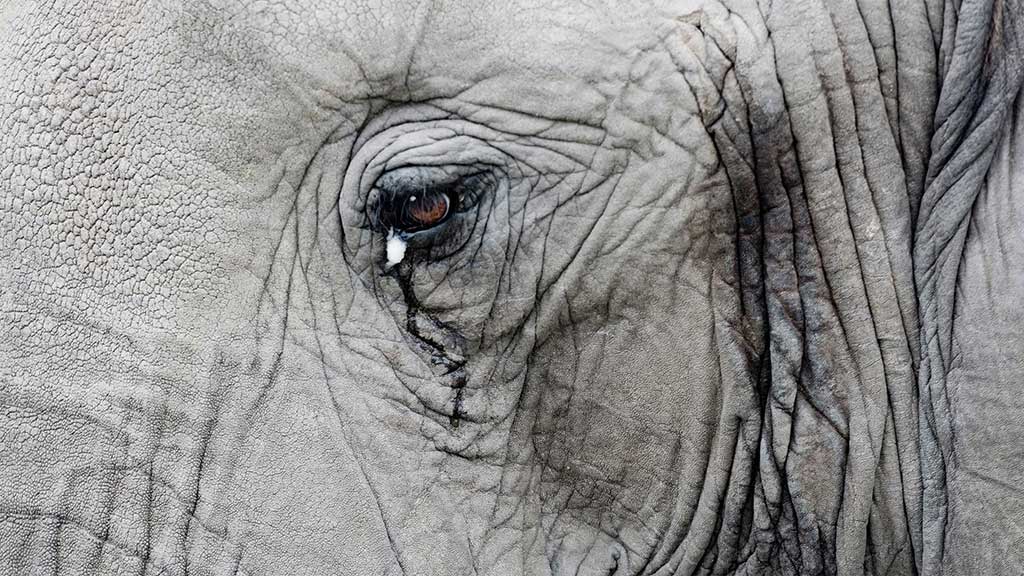


Eleanor died. Over the next few days various elephants visited her.

Elephants mourn their dead.

Animal minds | The Economist

One cat has become a Guardian Angel for other sick animals

This cat almost died and now spends her days caring for other animals who are sick.

...

According to Amit Goswami:

"When the material body dies, the learned tendencies of the subtle body survive as nonlocal memory, and will reincarnate in another physical body in the future.

"In between death and rebirth, we survive as a “soul”, a reservoir of accumulated character aspects or propensities that Easterners describe using the Sanskrit words karma and sanskara."[1]

At 'Under the Tree' we read:

"The Buddha points out we are not the body, not material objects, and not the things to which we become attached.

"The Buddha taught there are things which are 'not self' and 'not soul.'

"A spiritual Self exists that is not equivalent to any material fabrication."

Labels: , , , , , , , , , , ,

Monday, 5 October 2015

DREAMS


I once had an employee who believed that while she was asleep she could leave her body and go off to visit her relatives some hundreds of miles away in Sumatra.

Australian Aborigines believe that people leave their bodies during sleep, and temporarily enter the Dreamtime.

Australian Aborigines believe that in dreams dead relatives communicate their presence. At times the departed relatives may bring healing.

Australian Aborigine Dream Beliefs

Some Indigenous American tribes believe that dreams are a way of visiting one's ancestors.


Alice in Wonderland.

Today, about one-third of hospital patients over the age of 70 have 'hallucinations' which they think are real.

Hallucinations in the Hospital.

One patient I know sees her departed father.


The Sumerians in Mesopotamia (Iraq, Syria, Kuwait) believed that the soul, or part of it, actually visits the places and persons experienced in dreams. 

The Babylonians and Assyrians in Mesopotamia divided dreams into "good," which were sent by the gods, and "bad," sent by demons.

Ancient Egyptians believed that dreams brought messages from the gods.

In Chinese history, some people wrote of part of the soul leaving the body during sleep to travel in a dream realm.


The Indian text Upanishads, says that dreams can be expressions of inner desires, and, can involve the soul leaving the body and being guided until awakened.

The ancient Greeks believed that the Greek god Morpheus sent warnings and prophecies in dreams.

The Greeks borrowed the idea that souls leave the body during sleep.

The Roman philosopher Cicero believed that all dreams are produced by thoughts and conversations a dreamer had during the preceding days.


Jacob's dream of a ladder of angels, 1690, by Michael Willmann. Jacob's dream of a ladder

Most of the dreams in the Bible are in the Book of Genesis.

The ancient Hebrews believed that dreams can be the voice of God.

The Hebrews differentiated between good dreams (from God) and bad dreams (from evil spirits).

St. Augustine and St. Jerome claimed that that they gained useful insights from their dreams.

Martin Luther, however, believed dreams were the work of the Devil.

...

Some philosophers and scientists believe that the "physical world" may be an illusion.

In the Taoist book Zhuangzi, by Zhuang Zhou, we read:

"Once upon a time, Zhuang Zhou dreamed he was a butterfly, a butterfly flitting about happily enjoying himself. 

"He did not know that he was Zhou. 

"Suddenly he awoke, and was palpably Zhou. 

"He did not know whether he was Zhou, who had dreamed of being a butterfly, or a butterfly dreaming that he was Zhou. 

For the Hindus, Brahman (God) is everything, and is both in the world and not in the world, at the same time.

Hinduism

In the 17th century, Descartes wrote that a mind can exist without a body.

Meditations on First Philosophy.


Goya

Freud taught that the content of dreams is the result of unconscious wish fulfillment.

Freud saw dreams as a "road to the unconscious."

Freud argued that important unconscious desires often relate to early childhood memories and experiences.

Freud thought there was a possibility that dreams can be linked to telepathy.


Carl Jung wrote that dreams are messages to the dreamer and that the messages can help the dreamer to solve emotional or religious problems.

Jung wrote that recurring dreams mean that the dreamer is neglecting an issue related to the dream.

Jung believed that memories formed throughout the day also play a role in dreaming.

The unconscious deals with these when the ego is at rest.

Jung wrote that while dreaming we may tune in to the collective unconscious.

Jung also wrote about symbols in dreams.

For example, in your dream your wife might be represented by Britney Spears, or your boss might be represented by Adolf Hitler, or your workplace might be represented by Disneyworld.

...

Jie Zhang proposes that the function of sleep is to process, encode, and transfer the data from the temporary memory store to the long-term memory store.

Deirdre Barrett describes dreaming as simply "thinking in a different biochemical state" and believes people continue to work on all the usual problems in that state.[71]

From the 1940s to 1985, Calvin S. Hall collected more than 50,000 dream reports at Western Reserve University.

Hall's studies indicated that participants from varying parts of the world demonstrated similarity in their dream content.

Hall found that in dreams different locations and objects continuously blend into each other.

In the Hall study, the most common emotion experienced in dreams was anxiety.

[85]

...

Hall found that sexual dreams occur no more than 10% of the time and are more prevalent in young to mid-teens.

Daydreaming can be useful.

There are numerous examples of composers, novelists and filmmakers, developing new ideas through daydreaming. Similarly, research scientists, mathematicians and physicists have developed new ideas by daydreaming about their subject areas.

Labels: , , , , , , , ,